

The global fragrance industry is changing.
Consumers are becoming more interested in naturality, sustainability, ingredient stories and sensory experiences, while perfumers and formulators continue to search for materials that can bring character and complexity to their creations.
This is particularly relevant in France, one of the world’s most important fragrance and cosmetics markets.
France remains Europe’s largest importer of essential oils. In 2024, French imports of essential oils under HS code 330129 reached approximately €303.8 million, significantly ahead of Germany and the United Kingdom.
At the same time, French perfume exports have reached around €8 billion, demonstrating the global strength of French perfumery.
Behind this large and sophisticated industry is a less visible but fundamental part of the value chain:
Natural fragrance ingredients.
But why do natural materials continue to matter in an industry that has access to thousands of sophisticated aroma molecules?
The answer goes beyond simply being “natural.”
Natural Ingredients Are More Than a Marketing Story
When consumers hear the word “natural”, they may immediately associate it with clean beauty, sustainability or botanical origin.
For a professional perfumer, however, a natural ingredient can mean something much more interesting.
It can be a source of:
- sensory complexity
- olfactory character
- natural variation
- depth
- texture
- authenticity
- creative inspiration
A natural essential oil is not simply a single molecule with a defined smell.
It is a complex mixture of naturally occurring constituents that can interact with other ingredients in a fragrance formula.
That complexity can make natural materials valuable creative tools.
The challenge is understanding how to use that complexity.
Why Natural Materials Behave Differently
One of the fundamental differences between many synthetic aroma molecules and natural extracts is the composition of the material.
A single synthetic molecule can be relatively well defined.
A natural essential oil can contain numerous volatile constituents in different proportions.
This means that the sensory identity of a natural material is the result of an interaction between multiple compounds rather than a single chemical structure.
For a perfumer, this can create a more multidimensional olfactory experience.
The material may evolve throughout the development of a fragrance rather than simply providing one fixed olfactory effect.
This does not mean that natural materials are inherently “better” than synthetic materials.
They serve different purposes.
Modern perfumery often achieves its best results by combining both.
The Creative Value of Natural Fragrance Ingredients
A perfumer does not necessarily choose a natural ingredient simply because it smells pleasant.
The more important question is:
What can this material do inside a composition?
A natural material can contribute a distinctive character that changes the relationship between other ingredients.
It can add depth to a floral accord.
It can soften or round an otherwise sharp composition.
It can introduce a subtle green, spicy, fresh, warm or earthy dimension.
And sometimes its greatest value is not immediately obvious when smelling it on its own.
This is why professional evaluation of natural ingredients should not stop at a simple description such as “floral”, “fresh” or “rose-like.”
The real question is how the material performs as part of a formula.
Natural Ingredients Beyond Fine Fragrance
The role of natural aromatic materials is not limited to perfume.
Natural fragrance ingredients are also relevant to skincare, haircare, body care and wellness products, where the sensory experience can become an important part of product development.
For formulators, the question is therefore not simply whether an ingredient smells attractive.
It is how the ingredient fits into the complete product experience.
This can include aroma, application, texture, product positioning and the emotional associations created by the finished product.
Read more about rose essential oil benefits for skin, hair and wellness
Rose Is a Good Example
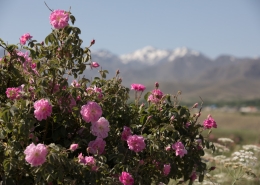
Rosa Damascena is one of the clearest examples of why natural ingredients remain important in perfumery.
“Rose” may sound like a simple olfactory category.
In reality, natural rose materials can present considerable complexity.
The final sensory profile can be influenced by factors including:
- botanical characteristics
- growing conditions
- harvest timing
- processing
- distillation
- production methods
- storage
- batch characteristics
As a result, two materials described as rose may offer different olfactory experiences.
For a perfumer, this creates both a challenge and an opportunity.
The challenge is selecting the material that fits the creative objective.
The opportunity is having access to a natural material with its own individual character.
Natural Ingredients and the Future of French Perfumery
France occupies a unique position in the global fragrance industry.
Its strength is not based only on heritage.
It is supported by a sophisticated ecosystem of fragrance houses, ingredient suppliers, laboratories, manufacturers, research organizations and creative professionals.
Recent developments within Cosmetic Valley also show how strongly the French cosmetics and fragrance ecosystem is focusing on naturality, sustainability and innovation.
In 2026, Cosmetic Valley highlighted topics including natural actives, biodiversity, scientific innovation and ecodesign. Its broader innovation activities also address biosourcing, upcycling, life-cycle analysis, resource optimization and regenerative approaches.
This is important because the future of natural ingredients is unlikely to be based on the word “natural” alone.
The industry increasingly needs materials that combine:
Natural origin + sensory value + technical suitability + responsible sourcing.
That is a much higher standard.
Sustainability Is Changing the Conversation
Sustainability is becoming increasingly connected with ingredient development.
The discussion is moving beyond:
“Is this ingredient natural?”
toward questions such as:
How was it produced?
How were natural resources used?
Can the raw material be sourced responsibly?
Can production be made more efficient?
Can by-products be valorized?
Can biodiversity be protected?
Can the ingredient provide meaningful value in the finished product?
These questions are increasingly visible across the French cosmetics and fragrance ecosystem.
Cosmetic Valley’s 2026 innovation programs, for example, include ecological transition, biosourcing, upcycling, eco-design, decarbonization and life-cycle analysis among the key areas being explored.
For natural ingredient producers, this represents an important shift.
Naturality is becoming the beginning of the conversation rather than the end of it.
What Does This Mean for Ingredient Buyers?
For procurement teams and ingredient buyers, the growing importance of natural materials creates a different challenge.
The question is no longer simply:
“Can I buy this ingredient?”
Instead, buyers increasingly need to understand the complete material behind the ingredient.
This includes its origin, production method, technical characteristics, availability, consistency and suitability for the intended application.
For high-value natural materials, the relationship between the producer and the fragrance or cosmetics company can therefore become strategically important.
A natural ingredient can influence not only the formula but also product positioning, sensory identity and the story behind the finished product.
Direct Access to Natural Ingredient Producers
As the natural ingredients market becomes more sophisticated, direct communication between producers and professional users can create additional value.
A perfumer may want to understand the sensory character of a material.
An R&D team may need technical information.
A formulator may want to evaluate performance in a specific application.
A procurement team may need to understand availability and supply conditions.
These are different questions.
The closer the communication is to the actual producer, the easier it can be to have a detailed conversation about the material itself.
This does not mean that distributors are unnecessary.
Distributors remain an important part of the global ingredient supply chain.
But for distinctive, high-value natural materials, direct producer relationships can offer another sourcing option.
Rosa Damascena: From Botanical Origin to Fragrance Creation
At Zariness, our focus is Rosa Damascena essential oil.
The reason this material remains interesting to us is not simply its reputation as a traditional luxury ingredient.
It is the combination of botanical origin, production method and olfactory character that makes natural rose oil relevant to modern fragrance and beauty development.
For perfumers, Rosa Damascena can become part of a fragrance composition.
For cosmetic formulators, it can contribute to the sensory identity of a product.
For brands, it can connect a finished product with a recognizable natural material.
And for ingredient buyers, it represents a specialized raw material that requires a serious approach to sourcing and evaluation.
The important point is that natural ingredients should not be evaluated only by the story attached to them.
They should be evaluated by what they actually bring to the final product.
The Future Is Not Natural vs. Synthetic
Perhaps the most useful way to think about the future of perfumery is not as a competition between natural and synthetic ingredients.
It is about the intelligent combination of both.
Synthetic materials can provide precision, consistency and specific olfactory effects.
Natural materials can contribute complexity, character, authenticity and sensory richness.
The perfumer’s role is to understand the strengths of each and use them creatively.
That is why natural ingredients are unlikely to disappear from modern perfumery.
Instead, their role may become more sophisticated.
The future may belong to formulations where natural materials are selected not simply because they are natural, but because they provide something valuable that helps create a better fragrance or beauty experience.
Conclusion
Natural ingredients continue to occupy an important position in modern perfumery because they offer more than a botanical origin.
They can bring complexity, character, sensory depth and creative possibilities to a formulation.
At the same time, the industry is asking increasingly demanding questions about sustainability, responsible sourcing, innovation and performance.
For France’s highly developed fragrance ecosystem, these changes create new opportunities for collaboration between perfumers, formulators, ingredient companies and producers.
And perhaps the most interesting question is no longer:
“Is this ingredient natural?”
It is:
“What can this natural ingredient make possible?”
That is where the real value of natural fragrance ingredients begins.
Developing a fragrance or cosmetic product with Rosa Damascena?
Talk to our team about the right Zariness Rosa Damascena essential oil for your application, including technical documentation and sample evaluation.
 https://zariness.ir/wp-content/uploads/2026/05/0036.jpeg
853
1280
admin
https://zariness.ir/wp-content/uploads/2026/09/ZARINESS-LOGO-300x100.png
admin2026-08-31 10:06:202026-08-31 10:16:00Natural Fragrance Ingredients: A Buyer’s Guide for 2026
https://zariness.ir/wp-content/uploads/2026/05/0036.jpeg
853
1280
admin
https://zariness.ir/wp-content/uploads/2026/09/ZARINESS-LOGO-300x100.png
admin2026-08-31 10:06:202026-08-31 10:16:00Natural Fragrance Ingredients: A Buyer’s Guide for 2026 https://zariness.ir/wp-content/uploads/2026/05/converted3.jpg
800
1200
admin
https://zariness.ir/wp-content/uploads/2026/09/ZARINESS-LOGO-300x100.png
admin2026-08-26 10:13:102026-08-26 10:49:18How to Evaluate Rose Otto Quality Before Buying
https://zariness.ir/wp-content/uploads/2026/05/converted3.jpg
800
1200
admin
https://zariness.ir/wp-content/uploads/2026/09/ZARINESS-LOGO-300x100.png
admin2026-08-26 10:13:102026-08-26 10:49:18How to Evaluate Rose Otto Quality Before Buying https://zariness.ir/wp-content/uploads/2026/08/rose-essential-oil-supplier-cosmetic-manufacturing.jpg-rotated.jpg
736
1308
admin
https://zariness.ir/wp-content/uploads/2026/09/ZARINESS-LOGO-300x100.png
admin2026-08-15 12:15:192026-08-15 13:11:01How to Choose a Rose Essential Oil Supplier for Cosmetics
https://zariness.ir/wp-content/uploads/2026/08/rose-essential-oil-supplier-cosmetic-manufacturing.jpg-rotated.jpg
736
1308
admin
https://zariness.ir/wp-content/uploads/2026/09/ZARINESS-LOGO-300x100.png
admin2026-08-15 12:15:192026-08-15 13:11:01How to Choose a Rose Essential Oil Supplier for Cosmetics https://zariness.ir/wp-content/uploads/2026/08/why-is-rose-essential-oil-so-expensive.jpg
491
735
admin
https://zariness.ir/wp-content/uploads/2026/09/ZARINESS-LOGO-300x100.png
admin2026-08-15 08:47:592026-08-15 08:50:53Why Is Rose Essential Oil So Expensive?
https://zariness.ir/wp-content/uploads/2026/08/why-is-rose-essential-oil-so-expensive.jpg
491
735
admin
https://zariness.ir/wp-content/uploads/2026/09/ZARINESS-LOGO-300x100.png
admin2026-08-15 08:47:592026-08-15 08:50:53Why Is Rose Essential Oil So Expensive? https://zariness.ir/wp-content/uploads/2026/08/Rose-Otto-vs-Rose-Absolute-rotated.jpg
736
983
admin
https://zariness.ir/wp-content/uploads/2026/09/ZARINESS-LOGO-300x100.png
admin2026-08-08 12:00:222026-08-15 08:59:39Rose Otto vs Rose Absolute: Understanding the Difference Between Premium Rose Ingredients
https://zariness.ir/wp-content/uploads/2026/08/Rose-Otto-vs-Rose-Absolute-rotated.jpg
736
983
admin
https://zariness.ir/wp-content/uploads/2026/09/ZARINESS-LOGO-300x100.png
admin2026-08-08 12:00:222026-08-15 08:59:39Rose Otto vs Rose Absolute: Understanding the Difference Between Premium Rose Ingredients https://zariness.ir/wp-content/uploads/2026/08/GC-Report.jpg
929
1693
admin
https://zariness.ir/wp-content/uploads/2026/09/ZARINESS-LOGO-300x100.png
admin2026-08-05 12:01:372026-08-05 12:01:39How to Read a GC-MS Report for Rose Essential Oil
https://zariness.ir/wp-content/uploads/2026/08/GC-Report.jpg
929
1693
admin
https://zariness.ir/wp-content/uploads/2026/09/ZARINESS-LOGO-300x100.png
admin2026-08-05 12:01:372026-08-05 12:01:39How to Read a GC-MS Report for Rose Essential Oil https://zariness.ir/wp-content/uploads/2026/05/converted1.jpg
393
769
admin
https://zariness.ir/wp-content/uploads/2026/09/ZARINESS-LOGO-300x100.png
admin2026-07-13 13:08:572026-08-31 10:18:41How to Choose a Reliable Rose Essential Oil Supplier
https://zariness.ir/wp-content/uploads/2026/05/converted1.jpg
393
769
admin
https://zariness.ir/wp-content/uploads/2026/09/ZARINESS-LOGO-300x100.png
admin2026-07-13 13:08:572026-08-31 10:18:41How to Choose a Reliable Rose Essential Oil Supplier https://zariness.ir/wp-content/uploads/2026/05/0048.jpeg
960
1253
admin
https://zariness.ir/wp-content/uploads/2026/09/ZARINESS-LOGO-300x100.png
admin2026-05-30 10:43:252026-08-31 10:20:59Rose Essential Oil for Perfumery: Why It Remains a Premium Fragrance Ingredient
https://zariness.ir/wp-content/uploads/2026/05/0048.jpeg
960
1253
admin
https://zariness.ir/wp-content/uploads/2026/09/ZARINESS-LOGO-300x100.png
admin2026-05-30 10:43:252026-08-31 10:20:59Rose Essential Oil for Perfumery: Why It Remains a Premium Fragrance Ingredient https://zariness.ir/wp-content/uploads/2026/05/0055-rotated-1.jpeg
960
1280
admin
https://zariness.ir/wp-content/uploads/2026/09/ZARINESS-LOGO-300x100.png
admin2026-05-20 10:58:102026-05-20 10:58:11Rose Essential Oil Benefits for Skin, Hair, Aromatherapy & Wellness
https://zariness.ir/wp-content/uploads/2026/05/0055-rotated-1.jpeg
960
1280
admin
https://zariness.ir/wp-content/uploads/2026/09/ZARINESS-LOGO-300x100.png
admin2026-05-20 10:58:102026-05-20 10:58:11Rose Essential Oil Benefits for Skin, Hair, Aromatherapy & Wellness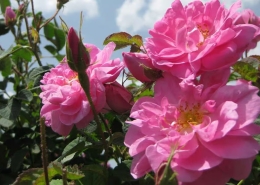 Fresh Rosa Damascena
https://zariness.ir/wp-content/uploads/2026/05/converted8.jpg
720
1440
admin
https://zariness.ir/wp-content/uploads/2026/09/ZARINESS-LOGO-300x100.png
admin2026-05-18 10:31:522026-05-19 07:52:56Premium Iranian Rose Oil Manufacturer
https://zariness.ir/wp-content/uploads/2026/05/0048.jpeg
960
1253
admin
https://zariness.ir/wp-content/uploads/2026/09/ZARINESS-LOGO-300x100.png
admin2026-05-15 10:55:322026-05-16 13:00:25Rose Essential Oil: Benefits, Uses, Extraction Process & Wholesale Supply Guide
Fresh Rosa Damascena
https://zariness.ir/wp-content/uploads/2026/05/converted8.jpg
720
1440
admin
https://zariness.ir/wp-content/uploads/2026/09/ZARINESS-LOGO-300x100.png
admin2026-05-18 10:31:522026-05-19 07:52:56Premium Iranian Rose Oil Manufacturer
https://zariness.ir/wp-content/uploads/2026/05/0048.jpeg
960
1253
admin
https://zariness.ir/wp-content/uploads/2026/09/ZARINESS-LOGO-300x100.png
admin2026-05-15 10:55:322026-05-16 13:00:25Rose Essential Oil: Benefits, Uses, Extraction Process & Wholesale Supply Guide