

How to Choose a Rose Essential Oil Supplier for Cosmetic Manufacturing
Choosing the right rose essential oil supplier is an important decision for cosmetic manufacturers, importers, distributors, and product developers.
Rose essential oil is a high-value botanical ingredient, and differences in botanical origin, extraction process, quality control, documentation, and batch consistency can have a significant impact on the final product.
For procurement professionals, the lowest price is rarely the only factor that matters.
Why Supplier Selection Matters for Cosmetic Manufacturers
Cosmetic manufacturers often work with fixed formulations, production schedules, regulatory requirements, and quality specifications.
Changing a raw material supplier can therefore create additional work for:
- Procurement teams
- R&D departments
- Formulators
- Quality-control teams
- Regulatory specialists
- Production managers
For this reason, supplier selection should be considered a strategic decision rather than simply a purchasing decision.
A supplier capable of maintaining consistent specifications across batches can help reduce unnecessary formulation adjustments and quality-control issues.
Verify the Botanical Identity
The first question a professional buyer should ask is simple:
What exactly is the botanical source of the oil?
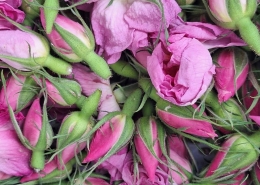
For premium Damask Rose Essential Oil, the botanical identity should be clearly specified as:
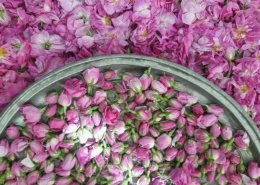
Rosa Damascena
This is particularly important because the commercial market includes different rose species, extracts, fragrance compositions, absolutes, and products marketed under broad terms such as “rose oil.”
A professional supplier should clearly identify the botanical source and product type.
A reliable supplier should be able to provide a combination of authenticity, consistent quality, technical documentation, communication, and supply reliability.
This guide explains the key factors professional buyers should evaluate before establishing a long-term relationship with a rose essential oil supplier.
Understand the Extraction Method
The extraction method directly influences the characteristics and application of a rose ingredient.
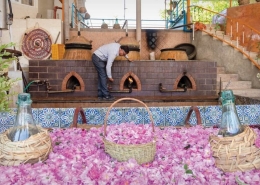
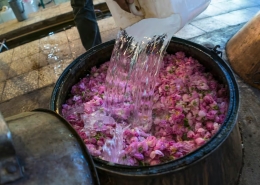
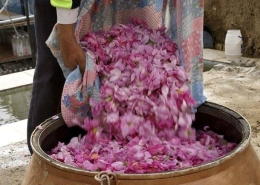
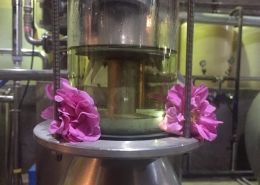
Premium Rose Otto is produced through steam distillation of Rosa Damascena flowers.
The process involves:
- Harvesting fresh flowers
- Loading the botanical material into distillation equipment
- Passing steam through the flowers
- Condensing the aromatic vapor
- Separating the essential oil from the rose water
Buyers should make sure they understand whether they are purchasing Rose Otto, Rose Absolute, a fragrance compound, or another type of rose extract.
Request Batch-Specific GC-MS Analysis
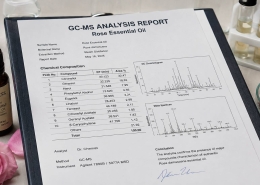
One of the most important documents for professional essential-oil buyers is a GC-MS analysis.
GC-MS provides information about the chemical composition of a particular batch.
For cosmetic manufacturers and R&D teams, analytical data can help with:
- Raw-material identification
- Quality assessment
- Batch comparison
- Formulation development
- Supplier qualification
A supplier that can consistently provide appropriate analytical documentation demonstrates a stronger quality-control approach than a supplier relying only on a product description.
Check the Complete Technical Documentation
GC-MS is important, but it should not necessarily be the only document available.
Depending on the buyer’s requirements, a professional supplier may need to provide:
- Certificate of Analysis (COA)
- Safety Data Sheet (SDS / MSDS)
- Technical Data Sheet (TDS)
- Allergen Declaration
- IFRA documentation
- Botanical information
- Batch information
Having the required documentation available before commercial purchasing can make supplier qualification significantly easier.
For cosmetic manufacturers, documentation is particularly important because several departments may need access to the same technical information.
Evaluate Batch-to-Batch Consistency
A sample can look excellent.
The more important question for a manufacturer is:
Will the next commercial batch have consistent characteristics?
For companies producing cosmetics at scale, consistency matters because changes in a natural ingredient can affect:
- Fragrance profile
- Product sensory characteristics
- Formulation development
- Finished-product consistency
- Quality-control procedures
Natural ingredients naturally have biological variability, which makes supplier quality management particularly important.
A professional supplier should have a defined approach to batch evaluation and quality control.
These products should not automatically be treated as interchangeable raw materials.
Don’t Compare Suppliers Only by Price
Rose essential oil is a high-value natural ingredient.
Comparing suppliers solely on price can create misleading conclusions.
A proper procurement comparison should consider:
Product Specification
What exactly is being supplied?
Analytical Documentation
Can the supplier provide appropriate batch documentation?
Quality Consistency
How consistent are commercial batches?
Packaging
Is the product packaged appropriately for storage and transportation?
Lead Time
Can the supplier support the required delivery schedule?
Commercial Quantities
Can the supplier support both initial orders and future commercial demand?
Communication
Can procurement, R&D, and quality teams obtain technical answers quickly?
The real cost of a raw material includes much more than the purchase price.
What Cosmetic Ingredient Importers Should Ask a Supplier
Importers and distributors often have additional requirements because they need to serve multiple downstream customers.
Before establishing a relationship, they may want to ask:
- What is the botanical origin?
- What extraction method is used?
- What packaging sizes are available?
- What technical documents are available?
- Is batch-specific GC-MS provided?
- What is the typical lead time?
- What commercial quantities can be supplied?
- How is the product stored?
- What are the shipping and export options?
- Can the supplier support repeat orders?
These questions help transform an initial supplier inquiry into a structured qualification process.
Choosing a Long-Term Rose Essential Oil Partner
A strong supplier relationship should go beyond a single transaction.
For manufacturers and distributors, the ideal supplier becomes part of a broader supply chain.
Important characteristics include:
- Product specialization
- Transparent technical information
- Consistent communication
- Reliable documentation
- Production capability
- Commercial flexibility
- Long-term supply potential
This is especially important for premium ingredients where replacing an established raw-material source can be expensive and time-consuming.
Why Specialization Matters
A supplier specializing in one botanical ingredient can provide a different level of product knowledge compared with a general trading company offering hundreds of unrelated materials.
At ZARINESS, our focus is exclusively Premium Damask Rose Essential Oil.
Our technical documentation includes:
- GC-MS
- COA
- TDS
- MSDS / SDS
- Allergen Declaration
- IFRA documentation
This specialization allows us to focus our production, quality control, and technical support specifically on premium Rosa Damascena essential oil.
Questions to Ask Before Placing Your First Commercial Order
Before moving from sample evaluation to commercial purchasing, procurement teams should confirm:
Product
Is the botanical identity and extraction method clearly defined?
Quality
Are analytical specifications and quality documents available?
Supply
Can the supplier support the expected annual purchasing volume?
Logistics
Are packaging, lead time, shipping terms, and delivery responsibilities clearly defined?
Commercial Terms
Are MOQ, pricing, payment, and repeat-order conditions clear?
A clear qualification process reduces surprises later in the relationship.
Conclusion
Choosing the right rose essential oil supplier requires more than comparing prices.
For cosmetic manufacturers, importers, distributors, and product developers, the most important factors include botanical authenticity, extraction method, analytical documentation, batch consistency, technical support, and supply reliability.
Premium Damask Rose Essential Oil is a specialized raw material, and the quality of the supplier can directly influence the efficiency of procurement, formulation, and production.
For companies looking for a specialized source of Premium Damask Rose Essential Oil, ZARINESS provides a focused product offering supported by technical documentation for professional B2B buyers.


 Fresh Rosa Damascena
